
For those who find wearables uncomfortable, these two devices offer high-accuracy sleep tracking using “invisible” sensors—one via pressure under your mattress and the other via low-energy radar.
The Under-Mattress Specialist: Withings Sleep Tracking Mat
The Withings Sleep Tracking Mat is a pneumatic (air-pressure) sensor that slides under your mattress at chest level. It tracks heart rate, respiratory rate, and movement through the mattress, making it completely imperceptible while you sleep.
- Unique Metric: It is specifically designed to detect breathing disturbances and snoring patterns.
- Smart Home: Can be configured to automatically turn off lights or adjust the thermostat when you get into bed.
- No Battery: Plugs directly into a wall outlet, so it never needs to be charged.
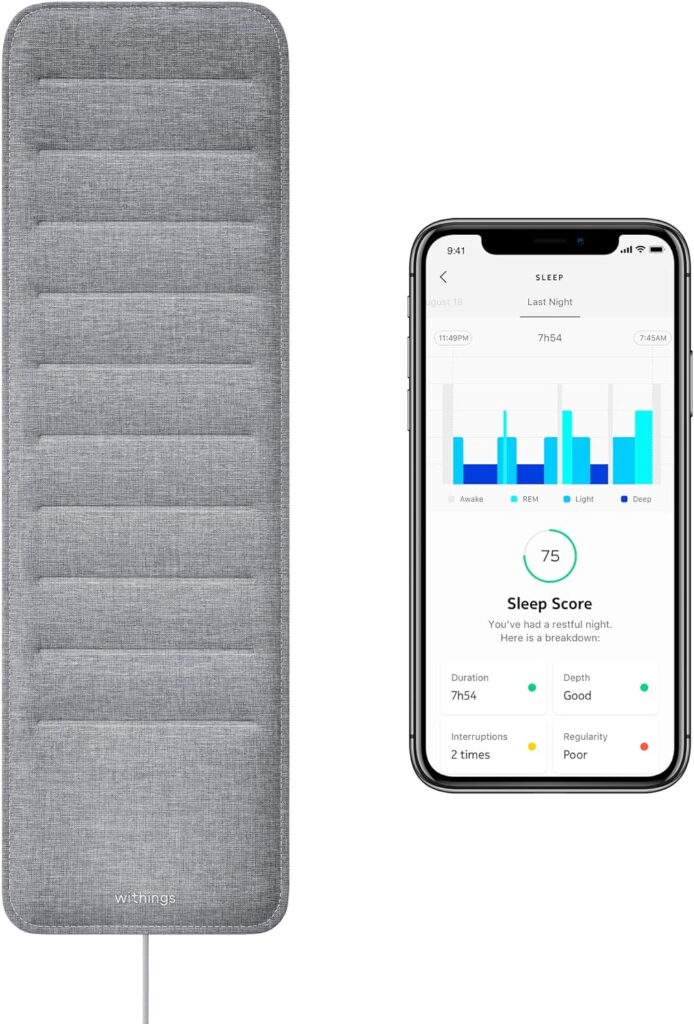
Withings Sleep Tracking Mat.
- Metric Depth: Tracks sleep stages (Deep, Light, REM), heart rate, and respiratory rate with clinical accuracy.
- Breathing Analysis: Features advanced sound and pressure sensors to detect snoring and breathing disturbances.
- Seamless Integration: Syncs automatically via Wi-Fi to the Withings app and can share a “Sleep Diary” directly with healthcare providers.
- Smart Home Ready: Compatible with IFTTT to automate lights and thermostats based on when you enter or leave your bed.
The Radar-Based Assistant: The Google Nest Hub
The Google Nest Hub uses a specialized “Soli” radar sensor to track your micro-movements and breathing from your nightstand. It requires no physical contact with the bed or your body.
- Unique Metric: Includes sensors that track light changes and temperature in the room to correlate environmental factors with your sleep quality.
- Privacy: It does not have a camera, and the radar data is processed locally on the device.
- Display: Provides a visual “Sleep Summary” on the screen the moment you wake up.
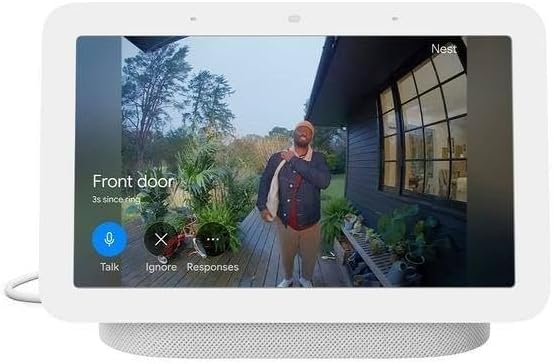
Google Nest Hub (2nd Gen).
- Motion Sense: Uses low-energy radar to track movement and breathing without a camera, maintaining total bedroom privacy.
- Environmental Insights: Built-in sensors monitor room temperature and light levels to help you understand how your environment affects your sleep quality.
- Audio Features: Features an upgraded speaker with 50% more bass than the original model for high-quality white noise and media playback.
- Morning Routine: Includes a “Sunrise Alarm” that uses gradual light to wake you up in a way that mimics natural daybreak.
Comparison
| Withings Sleep Mat | Google Nest Hub | |
| Placement | Under the mattress | On the nightstand |
| Sensor Type | Pneumatic / Pressure | Soli Radar / Motion |
| Tracks Snoring | Yes (Very accurate) | Yes (Via microphone) |
| Subscription | None | Fitbit Premium (Required for some stats) |
| Power | Plug-in (Always on) | Plug-in (Always on) |
Final Verdict
The Withings Sleep Tracking Mat is the superior choice for pure biometric accuracy and tracking breathing issues like sleep apnea indicators without a subscription. The Google Nest Hub is better for those who want a multi-functional device that helps manage their bedroom environment (lighting, temperature, and alarms) alongside basic sleep data.